
Friday, April 29, 2016

Modesty and Reflection

Find a heated modesty argument here.
 Like most Christian women who grew up in the church, I have heard countless sermons, lectures, and comments about modesty. Growing up, my mother would only allow me to wear shorts or skirts that were an inch past my fingertips when I stood with my arms at my sides. She used to remind me that, “we have attractive bodies and that can be very powerful, and so we must be respectful of others and of ourselves in the way that we dress, speak, and move.” In eighth grade, I went on a youth group retreat and the girls, independent of leaders, had a big discussion about
whether or not we were going to wear two-piece or one-piece swimsuits in order to respect the boys. Modesty seems to be a key portion of Christian indoctrination. At the end of her chapter on modesty, Evans concludes, “it’s not what we wear but how we wear it. And like clothing, modesty fits each woman a little differently” (Evans 140). Her conclusion sources from her discussions with Ahava and a Mennonite woman.
Ahava describes tzniut, the term used for modesty in Judaism as “more that just a list of rules about how to dress. It’s a state of mind. The idea is to avoid dressing in a way that draws attention to your outer self, but instead to dress so that your inner self is allowed to shine through. You should try to be pretty, but not alluring” (Evans 122). Here we see an idea supported by Paul in 2 Timothy 2:9, “I also want the women to dress modestly, with decency and propriety, adorning themselves, not with elaborate hairstyles or gold or pearls or expensive clothes, but with good deeds, appropriate for women who profess to worship God.” Both the idea of tznuit and Paul’s writings in 2 Timothy advocate for guidelines that dictate how a woman appears so that the emphasis is instead placed on her heart.
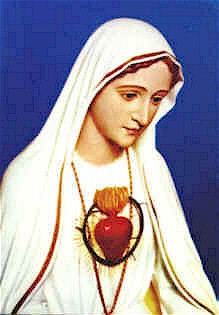
The Marylike Standards of Modesty
The question then becomes what sort of dress guidelines are appropriate. Paul firmly states that “every woman who prays or prophesies with her head uncovered dishonors her head” (Corinthians 11:5). Deuteronomy 22:5 requires that women “not wear men’s clothing… for the Lord your God detests anyone who does this.” The Catholic Church has codified modesty into The Marylike Standards of Modesty which stipulates sleeve and skirt length, amount of coverage required (measured in inches), the moderate use of more decorative fabrics (laces etc.), and to what amount clothing may emphasize any part of the body. Isaiah writes a fiery passage against accessories and as we saw in 2 Timothy, Paul echoes that view. Many, many religious groups have guidelines about modest dress, and very few of them look alike. So it seems that if the Bible has a cohesive set of modesty guidelines, it will require a significant amount of analysis to reveal them.
I’d like to shift our focus just slightly. Because while tzniut and many Scriptures offer rules for modest dress, Evans proposes that the rules aren’t really what matter. In spending time with a Mennonite woman, Evans realizes that “there are women for whom the bonnets and aprons foster humility and women for whom the same things foster pride.” She then continues to argue that our efforts to codify modesty have less to do with the pursuit of modesty and more to do with our desire to take the easier road. Modesty is complex and it can often seem easier to measure skirt lengths than to wrestle with Scripture. By codifying modesty, Evans argues (and I agree) that Christians get tangled up in the rules and lose sight of the true goal which often leads to more conflict and more bunny trails as Christians argue over how modesty is best manifested. But really, modesty is about humility. It’s about acknowledging that we are not the best and about finding contentment in our Spirit-filled selves rather than creating ways to draw attention to ourselves.
All of this sounds great, and I agree that Christians have lost themselves among the rules of modesty. But I also hesitate, because modesty is important, and as Christians we are called to hold one another accountable. I worry that allowing people to personally define modesty according to what they see as appropriate places humans above God and leaves no room for Christians to hold one another accountable. God has given us rules to guide us. They are scattered across the Bible; so it’s hardly accurate to say that God does not believe in rules. As we see in the Christ narrative, Jesus reframes and deepens the law from external to internal, requiring that we examine our hearts. But even as Jesus deepens the law and addresses our hearts, he does not remove the law from its place. If we apply the Christ narrative to modesty rules, we find that the rules do indeed have a place, provided that we remember their primary role in shaping and guiding our hearts rather than our closets.

I don’t have an answer for what the list of modesty rules should include. The Bible was not written to speak to today’s fashion trends and so this issue is quite convoluted. But in reflecting on the last several months of considering biblical womanhood, I’m reminded of the general theme that has emerged: biblical womanhood is about a woman correctly placing God at the top of her list, the center of her life, and the authority over all she does. So maybe Evans is right; maybe the best approach to modesty is to pursue a relationship with God, to ask him questions, and to listen to the answers. If I’ve learned anything in this journey of musings, it’s that God wants to respond to our questions. He wants help us wrestle with the complexities of our beliefs, and he loves to liberate us.   

Friday, April 22, 2016

Broken and Beautiful

           In Evans’ February chapter, she explores biblical beauty, including what the Bible says about sex. The chapter begins with a discussion of
“…the sentiment that the Bible holds women to a certain standard of beauty that must be maintained throughout all seasons of life and that wives must devote themselves to pleasing their husbands in bed…” (Evans 100)
Evans tells stories and shares comments from her readers that describe the Church’s expectations regarding sex and beauty, and the all too often associated feelings of guilt, shame, confusion, and general suppression. Even though the geographic area in which I was raised has a very different set of societal expectations from the society with which Evans is familiar (Evans is from the South and I am not), and even thought my parents very carefully and intentionally framed conversations about beauty and sex within the Christian faith, I did not escape feeling some of the same feelings expressed in Evans’ stories, especially in related to the concept of beauty.

Here is a blog post about "finding contentment with the girl in the mirror."
             As in the case of the Proverbs 31 woman and her checklist, I am inclined to advocate that Christians set aside their beauty related squabbles in favor of prioritizing seeking God’s face. However, I’m also reminded of my own struggles with beauty and the ways in which God has used my mother to form how I, as a Christian, think about beauty. I’m reminded of the many girls and women I know and have known over my relatively short life that have expressed insecurities about their appearance and desirability. And above all, I’m reminded of the many, many times when the only thought that kept me from hating my appearance was the knowledge that to the Creator of the Universe, I was more precious than sparrows. In many ways, I think the underlying issues beneath beauty-related insecurities, confusion, and guilt stem from misplaced identity. If we look at the story of the Bible, if we look at beauty in the context of creation, Christ, and Christ’s future return, our identities clarify and perhaps things will fall into a better-formed perspective.

“…So God created mankind in his own image, in the image of God he created them; male and female he created them... God saw all that he had made, and it was very good…” –Genesis 1:27, 31

            We could argue all day about how God created mankind, whether through immediate construction of matter and breath, or through the gradual, delicate process of evolution. That is a discussion for another time. The Genesis narrative is quite clear: “In the beginning God…” (Genesis 1:1, emphasis mine). God authored, motivated, and directed the creation of the world. God authored, motivated, and directed the creation of humanity. And he deemed his creation, humanity included, very good. We, as creation made in God’s image, share closeness with him. Not because of any personal honor or pride, but because it is yet another manifestation of God’s love for his creation and his desire to be close to us in relationship. From Genesis 1:27, we can learn that humanity has been important to God from the very beginning.

Now, we must acknowledge the distortion and disorder brought about by sin. It is true that sin is enslaving. Paul tells us that we cannot escape its grasp (Romans 3:9). But I find it important to note that even when sin enters the world, God does not revoke humanity’s likeness to the image of God. Even in sin, God desires closeness with humanity. Even in sin and disorder, we are important to God.

“Be perfect, therefore, as your heavenly Father is perfect” –Matthew 5:48

“For in Christ all the fullness of the Deity lives in bodily form, and in Christ you have been brought to fullness. He is the head over every power and authority.”
–Colossians 2:9-10

            Christ, as the answer and solution to sin, embodies, teaches, and clarifies what it means to be a Christian and to base one’s identity around a relationship with God. I will not endeavor to explore all of the many, many aspects of our identity in Christ, but I will emphasize a point that I think is important as we consider beauty: In Christ we are complete. In Christ we are fully loved. In Christ we are to source our authority and direction from God. In Christ we are made whole.

"The Truth About Me" by Mandisa

Then I heard what seemed to be the voice of a great multitude, like the sound of many waters and like the sound of mighty thunder peals, crying out, “Hallelujah! For the Lord our God the Almighty reigns. Let us rejoice and exult and give him the glory, for the marriage of the Lamb has come, and his bride has made herself ready…” And the angel said to me, “Write this: Blessed are those who are invited to the marriage supper of the Lamb.” And he said to me, “These are true words of God.”
Then I fell down at his feet to worship him, but he said to me, “You must not do that! I am a fellow servant with you and your comrades who hold the testimony of Jesus. Worship God! For the testimony of Jesus is the spirit of prophecy” –Revelation 19:6-10

            In Revelation, we find a perspective of how we will function in our most complete self, in the moments when Jesus returns, justifies the world, and transforms the phrase “already, but not yet” into “already and now.” The perspective is not new, but is a continuation of we saw when we looked at how Christ completes us. In Revelation, the focus is on Jesus Christ. In the most complete, whole state that will exist in eternity, the focus is on Jesus Christ.

            The Genesis and Christ Narratives clearly position a person’s identity on the firm foundation of God’s love rather than on the shifting sand influenced by societal voices. If we apply this idea to the concept of beauty, we find a perspective that encourages people to fix their eyes on God rather than ascribing to the perspectives that assign identity based on appearance.

            So when the mirror mocks and jests and reflects insults sourcing from our own minds, how are we to respond? We are to respond by remembering that we are created in God’s image and He desires closeness with us. We are to respond by rejoicing in God’s desire to be pleased with us. We are to respond by claiming our identity, complete and whole, in Christ. We are to respond by thanking Christ for dying on the cross for us. We are to respond by yearning for Christ’s return, and the moment when we will be united with him in Heaven.

            In middle school, one of my friends wrote a phrase on my arm. “Broken and Beautiful.” As humans, we are broken by sin. As God’s creation, we are beautiful and he redeems us every day.

"Beautiful for Me" by Nichole Nordeman

Sunday, April 17, 2016

Wrestling with the Proverbs 31 Woman

          It was a glorious spring afternoon, made all the more glorious by the freedom of a Friday schedule. We had pulled three extra chairs up to surround the small wooden table nestled under a formidable oak tree and for the hundredth time, we bowed our heads and asked that God would bless the time shared in discipleship. About 30 minutes later, our leader Lauryn told us, amidst many giggles, of a male she thought was the cat’s pajamas. “There’s something about him,” she said, her eyes bright with excitement, “I want to be a real Proverbs 31 woman for him.”
A chalkboard doodle of my discipleship group, fondly called "d-ship."
That was the first time I had ever heard of this character, the Proverbs 31 woman. So when Lauryn mentioned her, I asked for clarification. As she explained Proverbs 31, which she characterized as an ideal that Christian women should pursue, my initial thoughts were something along the lines of, “Why on earth would you do that? Where’s the Proverbs 31 man? If this passage is truly critical for life as a Christian woman, then I have been poorly educated. And if Proverbs 31 isn’t critical for life as a Christian woman, then why would you care about it? And honestly, why are you pursuing an ideal to be worthy of a male when the eternal goal of Christlikeness still remains? Shouldn’t a Godly man want a Godly woman? And isn’t a Godly woman formed by pursuing God, not a Proverbs 31 caricature?”

I mentioned in the last post that my Atlanta born-and-raised mother was very intentional in raising my sisters and me (as any good parent should be). When I asked my mother why I hadn’t ever heard of the Proverbs 31 woman, she told me her goal was to connect her children’s hands with the hands of God and to leave room for God’s whispers to each child. Her perspective of indoctrination emphasized organic relationships rather than a set curriculum. My mother and father taught me that pursuing God is of the greatest importance, and that God will not leave me without teaching.

Rachel Held Evans exploration of the Proverbs 31 checklist culture opened my eyes to a legalistic Christian faith that I did not understand. I did not grow up pursuing the P31 standard, but I know young women here in college who are defined by its guidelines.

Evans advocates that Proverbs 31 was never meant to be a checklist. Her friend Ahava, the wife of Jewish Rabbi living in Israel, explains that she is
“called an eshet chayil (a valorous woman) all the time. Make your own challah instead of buying? Eshet chayil! Work to earn some extra money for the family? Eshet chayil!... Every week at the Shabbat table, my husband sings the Proverbs 31 poem to me. It’s special because I know that no matter what I do or don’t do, he praises me for blessing the family with my energy and creativity. All women can do that in their own way.” (Evans 87-88)
This liberating interpretation of Proverbs 31 sounds pretty great to me. I’m all for celebrating women’s investment in the infrastructure of the household. And yet, this interpretation doesn’t settle all of my questions.

The crux of my questions seems to hinge on this: Jesus asks Christians to pursue what might seem to be impossible ideals. In Matthew and the Sermon on the Mount we are asked to rejoice in the face of persecution (5:12), reconcile hatred against others immediately (5:23-24), resist lust (5:28), love your enemies (5:44), and then, as if the previous list wasn’t hard enough, Jesus asks us to “Be perfect, therefore, as your heavenly Father is perfect” (5:48). Following Jesus isn’t meant to be easy. God calls us to resist the devil and to pursue Christlikeness, requiring that we make incredible commitments and take drastic action. This does not mean that we will not make mistakes, but it does mean that we are not left alone in our efforts. It is through Jesus that we are able to pursue Christlikeness. It is through Jesus that we are able to resist sin. It is through Jesus that we are made perfect.

Here is a blog post typical of P31 material. 
It may be true that Proverbs 31 is meant as a poem, as an anthem, as a praise, and as a celebration of womanhood, but in the midst of the arguments between the Proverbs 31 checklist culture and the Proverbs 31 praise culture, I think it’s important to remember that God calls Christians to a higher standard, a standard that is not of this world, a standard that is difficult to pursue. If we concede for a moment that Proverbs 31 is indeed best interpreted as a checklist for a Christian woman, then we need not tremble in fear. It is through Jesus that we are made perfect. So if we are going to resist the Proverbs 31 checklist culture, we should not resist it because its difficulty, or apparent impossibility does not align with God’s desire for our Christian lives. It isn’t as though God doesn’t ask us to do difficult things in other areas of our lives.

So if we are going to resist the Proverbs 31 checklist culture, what should motivate that resistance? I do not presume to have all (or even any) of the answers, but my musings are as follows: Proverbs 31 tells of a woman who is hard working, has a big heart, and loves God. Her hard work, big heart, and love for God manifests itself as she “gets up while it is still night,” “provides food for her family,” “considers a field and buys it,” “opens her arms to the poor,” sews garments to clothe her family and sell in the markets, “speaks with wisdom,” “does not eat the bread of idleness,” and fears the Lord (Proverbs 31). In my mind, it is not the specific chores listed in Proverbs 31 that are important. Any time we place a construct in between God and ourselves we run the very real risk of that construct becoming our god. I could follow the Proverbs 31 checklist literally for a lifetime and still miss the real goal. It is the themes of Proverbs 31 that should draw attention, most importantly a woman’s love for God.


Here is a blog post reacting to the Proverbs 31 checklist culture.

At this point, after a bit of wrestling, I think I’m back at where I began. I am a Christian. I love God. I believe Jesus is the Son of God and he came to earth, died, and rose again. I believe loving God and pursuing Christlikeness is the most important goal a person can have. And that places Proverbs 31 lower on my list of priorities. I find it hard to believe that in pursuing God, learning from him, and responding to his teachings, that I will not also be worthy of the praise written in Proverbs 31. And if I ever get that kind of praise, it will be nice to hear, but it will not mean the fulfillment of my life’s goal.